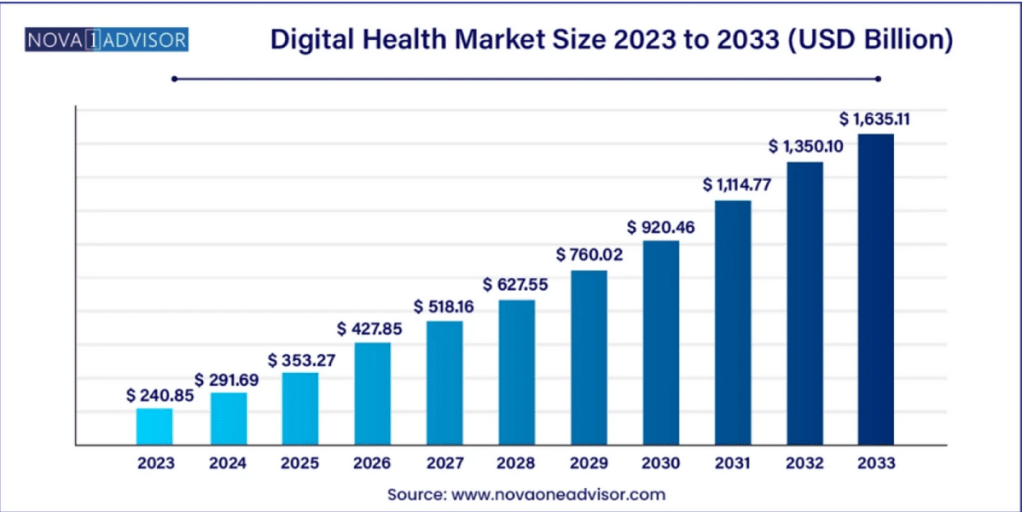
Digital health is widely discussed today, and there is growing consensus that it could be genuinely transformative for healthcare. Over the past eight years, we have been developing novel statistical methodologies grounded in functional data analysis and statistics on metric spaces, with the goal of enabling meaningful clinical decision-making from dense, high-frequency physiological signals.
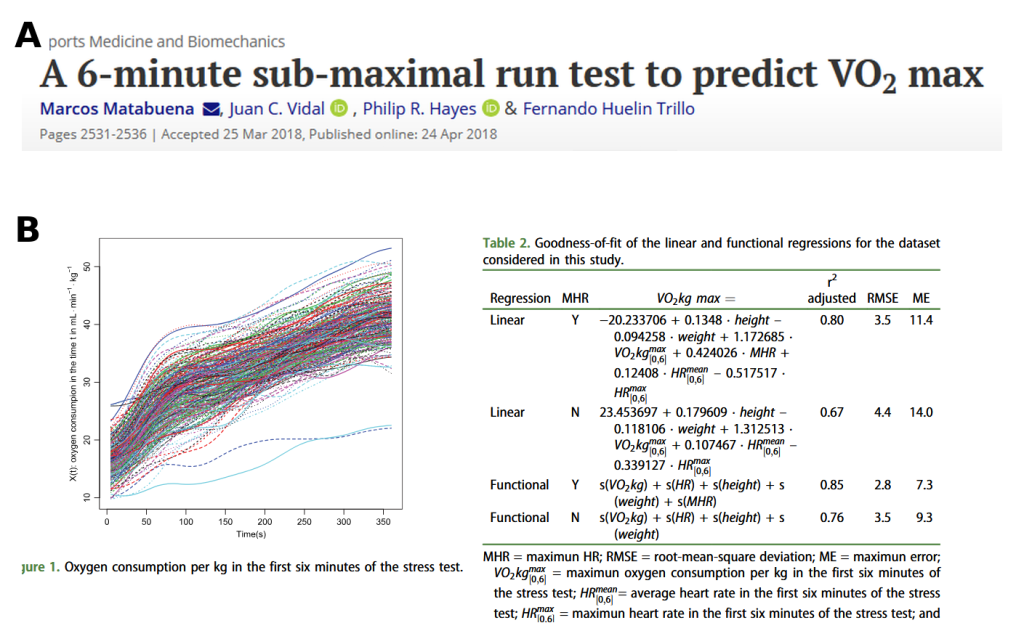
A 6-minute sub-maximal run test to predict VO2
max
This work began with a project on the indirect prediction of maximal oxygen uptake (VO₂max) using high-performance athlete data collected in Pontevedra—among the earliest efforts in sports physiology to predict this key biomarker with high accuracy
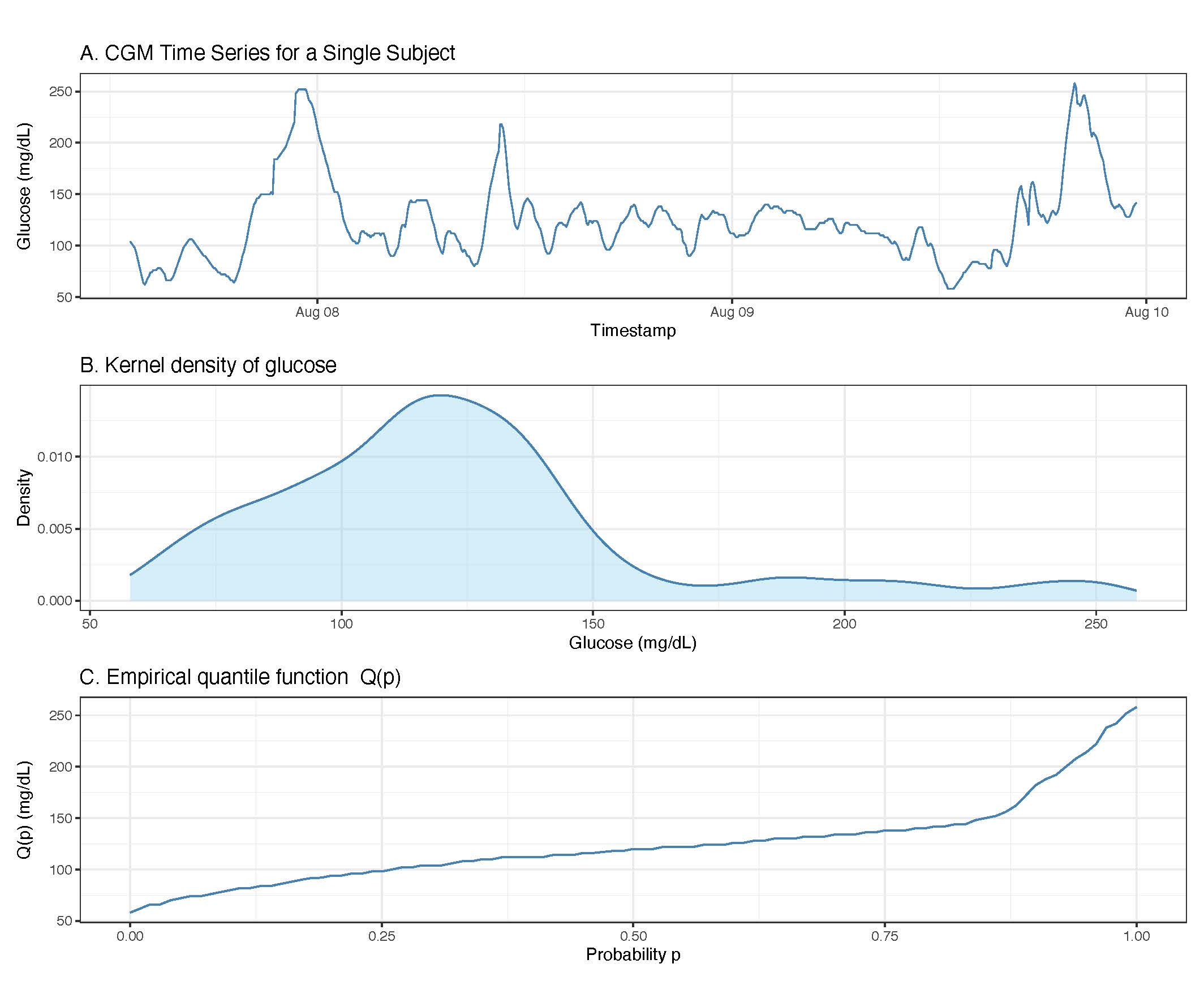
Glucodensity, Distributional Data Analysis
We propose the notion of glucodensity in digital health: a general functional representation of biosensor time series designed to overcome the limitations of conventional summaries when individuals are monitored under free-living conditions. Because these recordings are highly heterogeneous and not directly comparable across individuals, glucodensity provides a principled way to extract meaningful, comparable information from dense physiological signals.
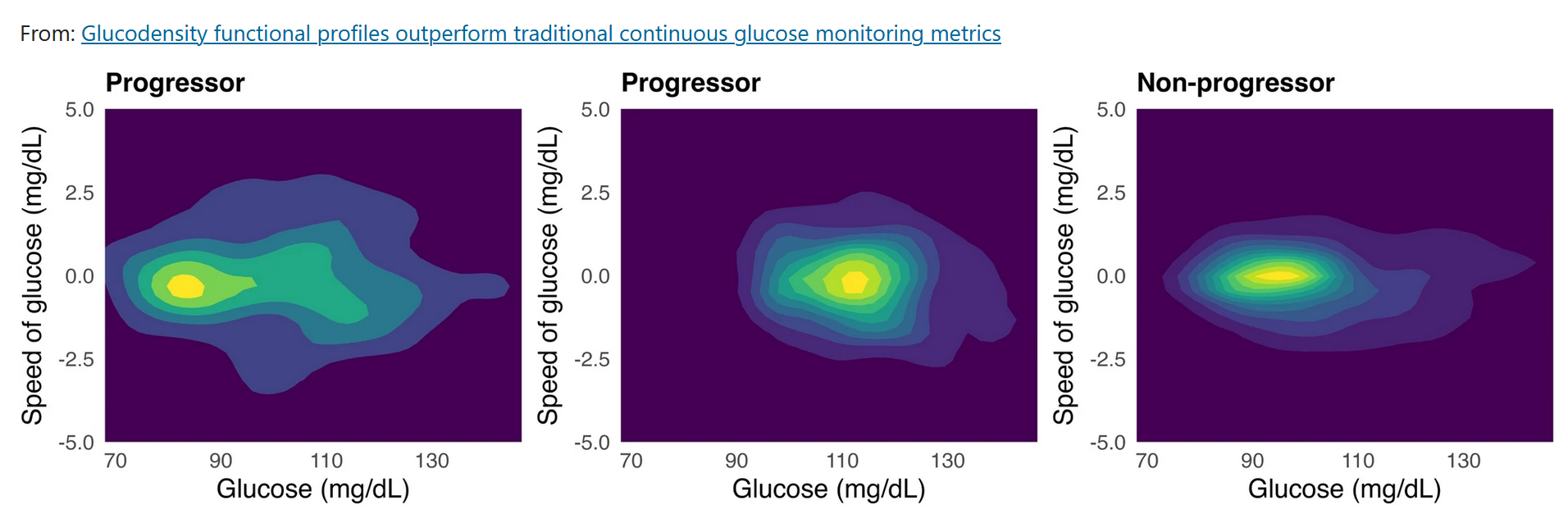
Glucodensity outperform traditional continuous glucose monitoring metrics
We extend the original univariate glucodensity methodology by introducing glucodensity dynamics, capturing the speed and acceleration of glucose changes. Our results indicate that glucodensity provides a state-of-the-art framework for analyzing continuous glucose monitoring (CGM) data while preserving interpretability.
Our success in digital health is driven by methodological innovation in statistics and machine learning
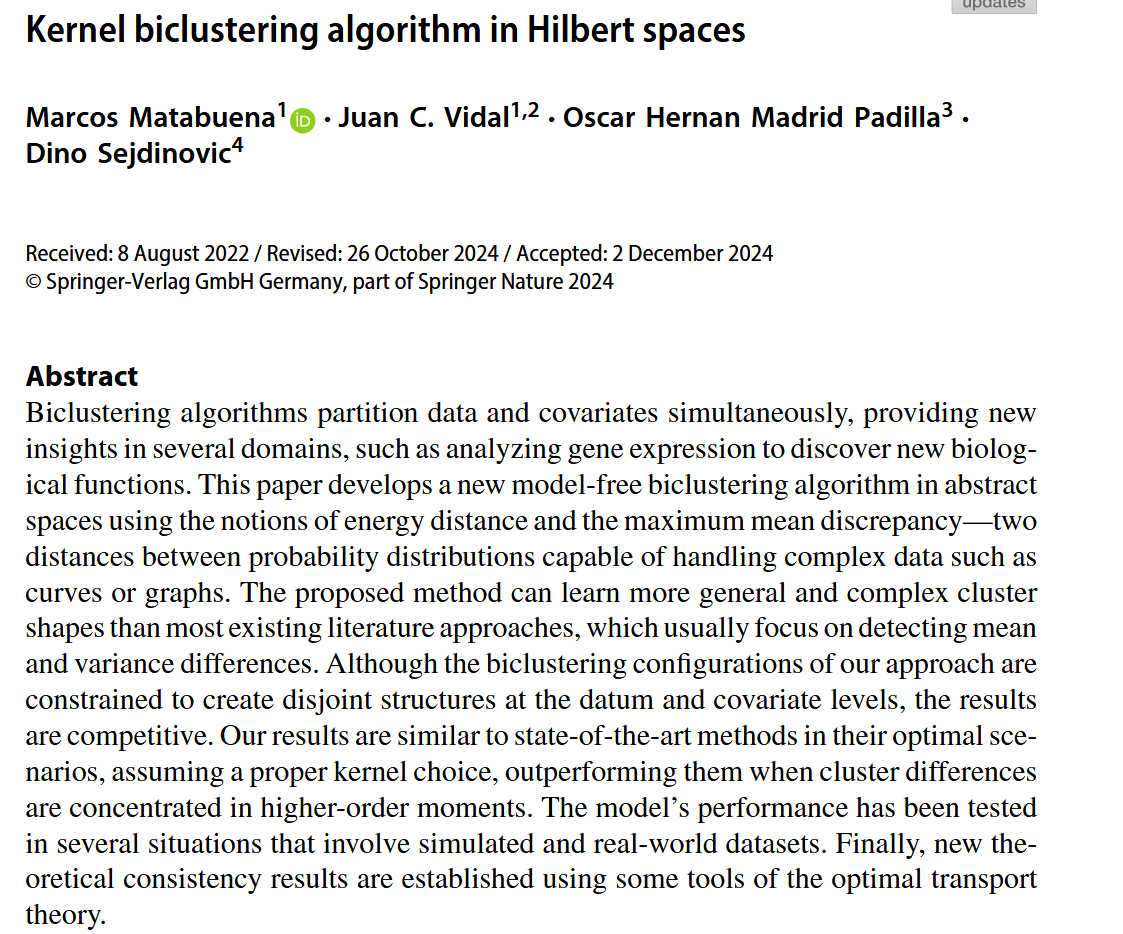
Kernel biclustering algorithm in Hilbert spaces
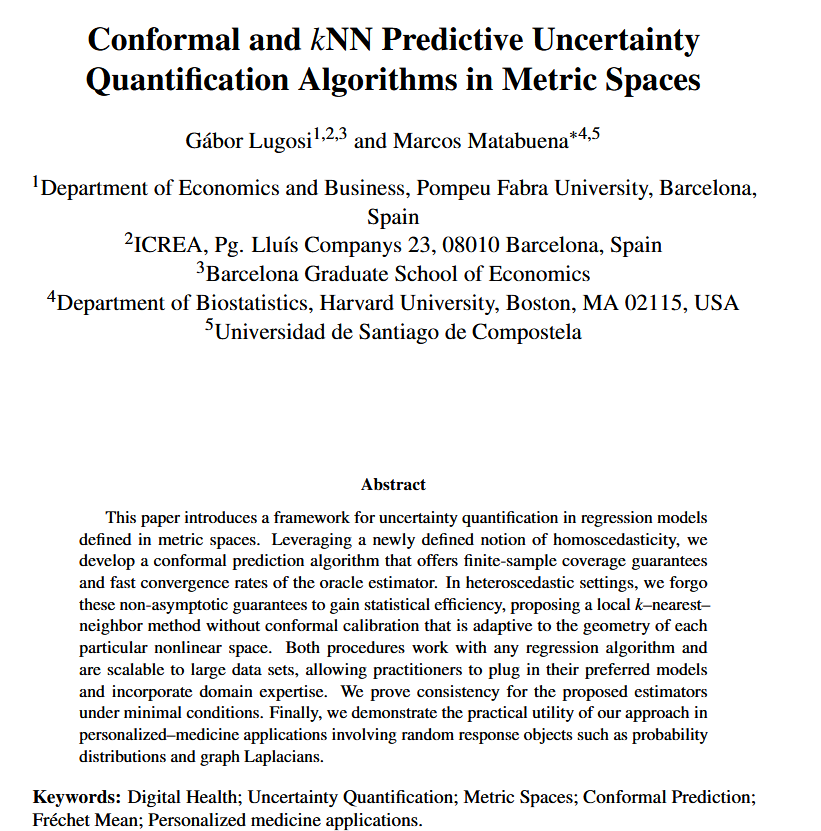
Conformal and kNN Predictive Uncertainty Quantification Algorithms in Metric Spaces

Denoising Data with Measurement Error Using a
Reproducing Kernel-based Diffusion Model
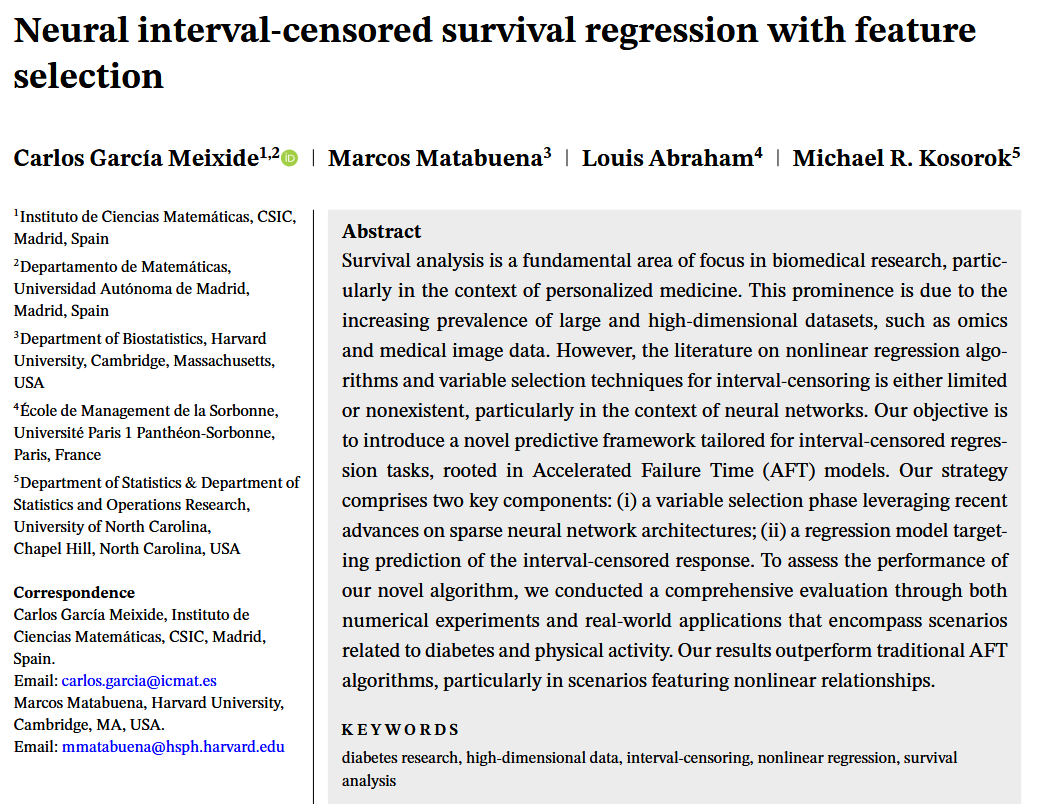
Neural interval-censored survival regression with feature
selection
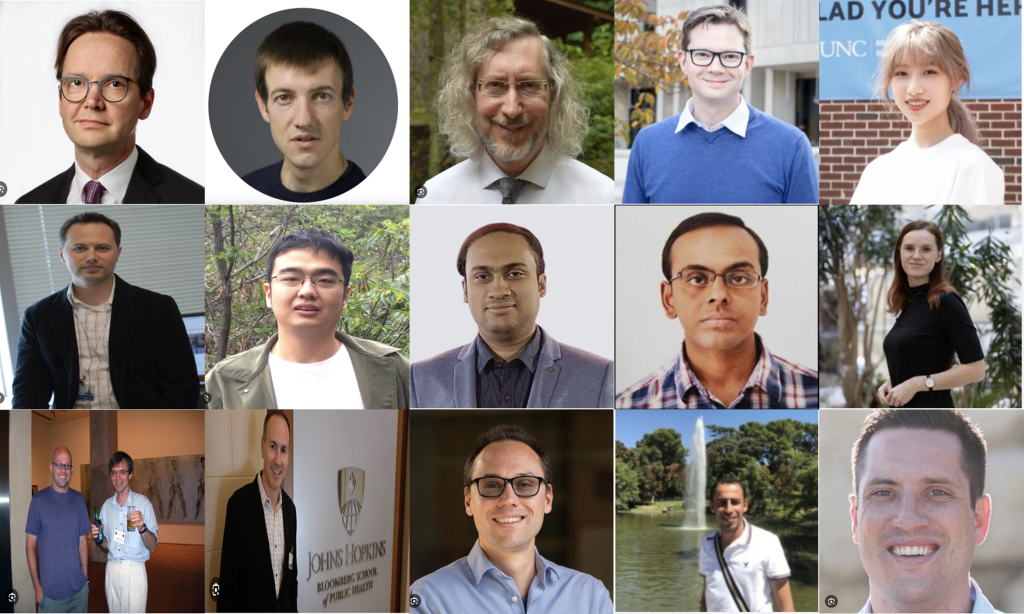
The success of research depends on carefully selecting your collaborators. To move the field forward, surround yourself with people who are enthusiastic, motivated, and well-prepared
Future
- New generation of statistical AI methods for digital health.
- Foundational contributions to integrate digital health data with genetic data.
- Operations research and biostatistics. Using digital health data to improve decision-making in healthcare management.
The future of healthcare is digital. If you have any questions about our work or would like to explore a collaboration, please contact Marcos Matabuena at Marcos.Matabuena@mbzuai.ac.ae.

 Marcos Matabuena